

SinaFirst Limited
Trade shows in China: three points worth remembering
Trade fairs and shows are often seen by foreigners as a “one-stop solution” and the only right way to source reliable suppliers and spot new products coming out of China. People arrive expecting a clean shortlist after a few days of walking the halls. But reality is usually different.
Exhibitions in China can be useful as a business tool and a first filter. But in practice, they give you first impressions, not certainty. Along with a few genuinely useful leads, there is plenty of noise as well. If you treat a fair like a solid shortcut, you’ll likely pay for it later.
1. Specialization matters more than size
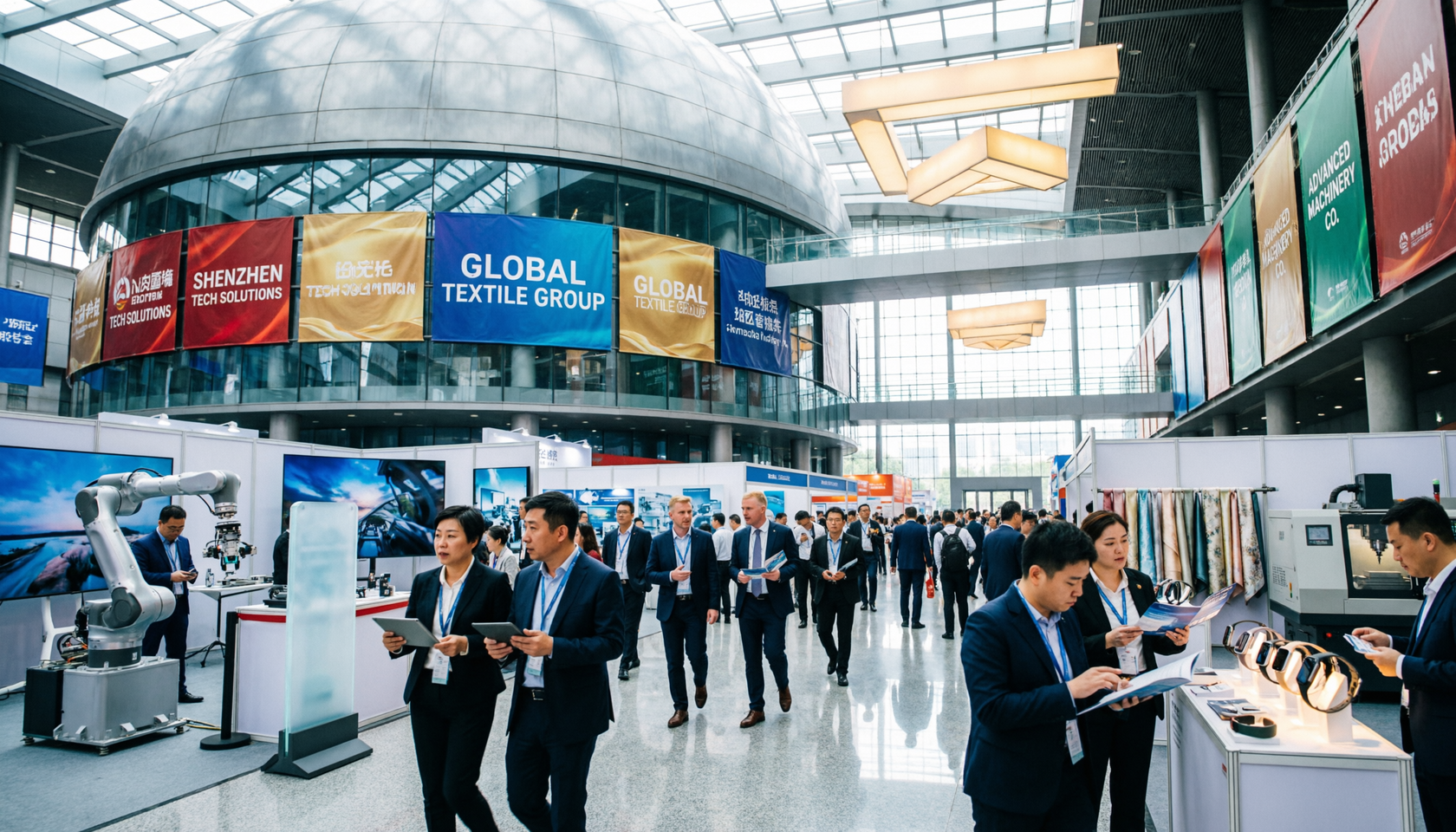
Yes, trade shows can be great for product discovery and for understanding where the market is moving. But if you are sourcing a specific product category for your business, a niche, industry-focused event is usually a better choice than a well-known mixed-category show that tries to be “everything under one roof.”
Large general exhibitions can look impressive. The Canton Fair is a good example. It’s iconic, it has scale, and it has become a “brand name” for first-time visitors, casual attendees, and curious newcomers. But that doesn’t automatically make it the most efficient platform for focused sourcing.
You’ll see big companies that mainly welcome large-volume orders, but you’ll also meet small businesses and new traders trying to win any customer and at least cover their exhibition costs. That mix creates noise, and it’s easy to leave with a long contact list that looks productive but won’t hold up later. You see a lot, but not all of it is relevant or actionable.
By contrast, a niche fair tends to be quieter in the right way. Focused events usually give a cleaner match between what you need and who is exhibiting. In many categories, reliable suppliers even prefer specialized fairs because the format is simply more efficient. Lower costs, more qualified visitors, fewer “tourists.” A big general show can be a mix of high- and low-value traffic, which is not always worth the price of entry for seriously focused suppliers.
2. Be realistic about ROI. A fair is the start, not the finish
A trade event in China is not a curated list of the best suppliers. It’s a marketplace with very mixed quality. A strong booth is not proof of strong execution. It’s often proof of good marketing and enough budget.
You will meet strong companies, average ones, and very weak ones. A badge and a polished booth don’t always mean a “top-tier factory.” It can simply mean they paid for a booth and showed up.
That’s why expecting a fair to deliver a fast, guaranteed return often backfires. If the KPI becomes “I must sign a deal on the spot,” it pushes you into rushed decisions. That is usually where expensive mistakes come from. In China you can find almost anything, including problems that look very professional on a stand.
3. China specifics vs. the Western model
A fair can open doors. But if you plan to work with China seriously and long-term, it helps not to bring a “Western assumption” into every conversation, including planning, negotiations, and decision-making.
You can have a smooth meeting, get a clean brochure, and still end up with a supplier that can’t deliver what you assumed they could. Often it’s not because China is “bad.” It’s because people underestimate the cultural gap and oversimplify how things really work.
Conversations in China can be more contextual and flexible than you might expect. What feels like a clear, logical agreement on your side can look very different on theirs. Less linear, more situational, more “we’ll see as we go.”
This is why trade-fair impressions in China can be misleading. First impressions are cheap. Execution is not.