
Are you sure the factory you’re visiting in China is a real one?
Published: 29 December 2025
Updated: 18 August 2026
Factory theater is something you can meet during sourcing in China. When an overseas buyer arrives for a visit, a supplier may bring in a full cast: workers at the machines, tools on the benches, boxes of ready goods by the gate. The production scene is staged. The product may not be made there at all.
Behind the scene, the supplier buys the product from other factories and resells it as their own. They test demand, earn money, and only later — if the product sells — start building their own production. That is “fake it till you make it” in practice. In China it is not a fringe trick. It is a normal way to enter a market.
Most foreign buyers would call it a scam. Most Chinese businesspeople would not. Western businesses tend to prepare for a long time: build the process, polish the details, invest, and launch one product close to ideal. Many Chinese businesses do the opposite. They launch early, in several directions at once, and fix things as they go. A staged factory is an extension of that logic: show the capability first, build it later.
There is one more reason the theater exists, and buyers create it themselves. Many overseas buyers refuse to work with “middlemen” on principle. So the supplier gives them what they demand: a manufacturer. The visit is staged not to rob anyone. It is staged to pass the buyer’s own filter.
A fully staged production is only one kind of theater. The second kind is just as common: the production is real, but the company showing it to you is not the one that runs it.
In May 2026 I flew to inspect a factory before a deposit on a client’s project: a custom food trailer over seven metres long, budgeted at $13,000–16,000. Not a catalogue configuration — the equipment inside was custom, built to the client’s project. The supplier had passed every remote filter. The manager knew the product, worked through the drawings with me, and answered technical questions without pauses. Remote sourcing can narrow the field, but it cannot close a decision like this. Before any deposit, we agreed with the client that I would go and look.
The production floor was real: welding, assembly, trailers at every stage of build. The two men who brought me there moved around it like people who work there. One detail did not fit. The banners over the floor carried a company name that was not the name I had been talking to. “One of our brands,” the manager said.
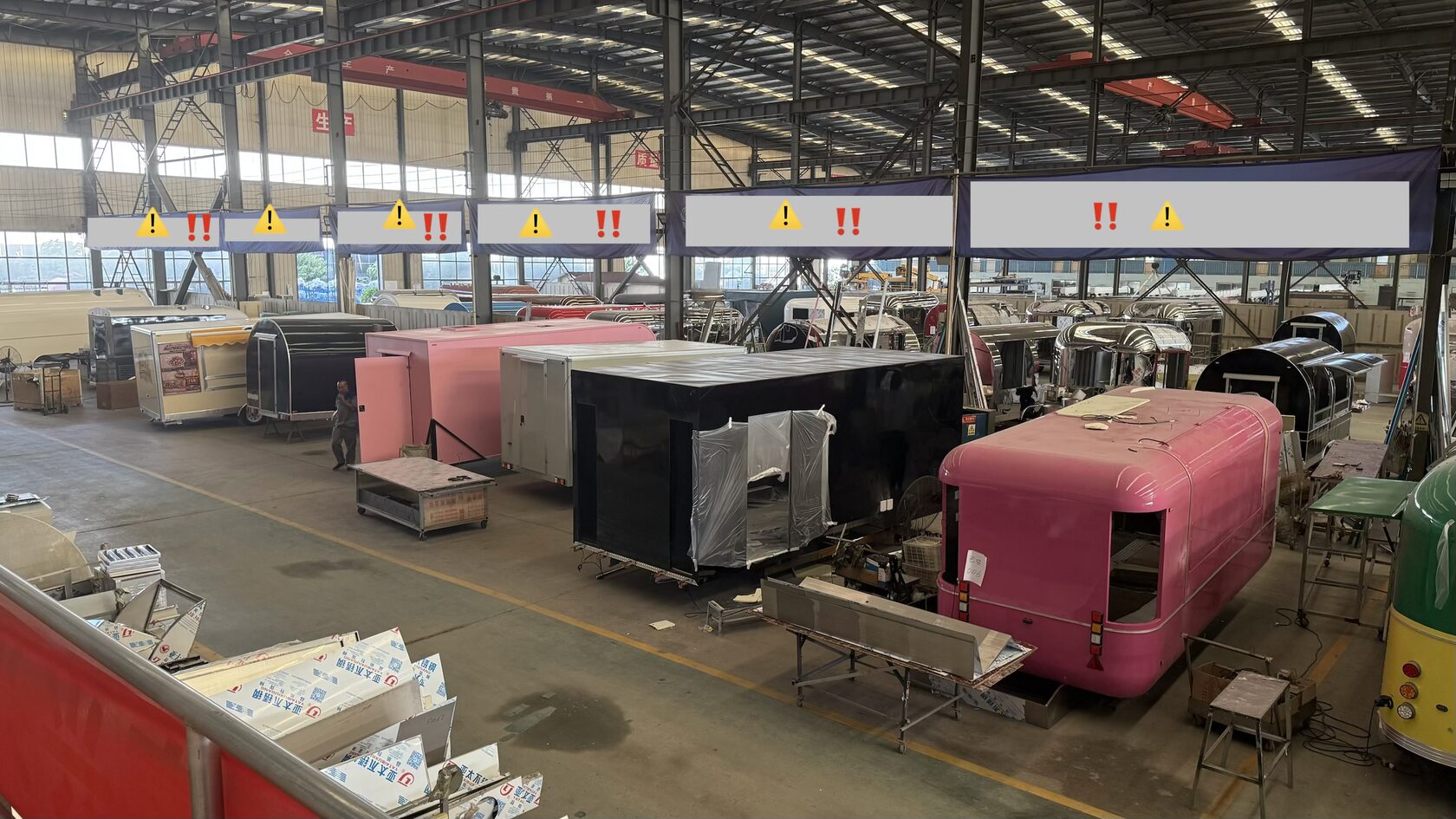
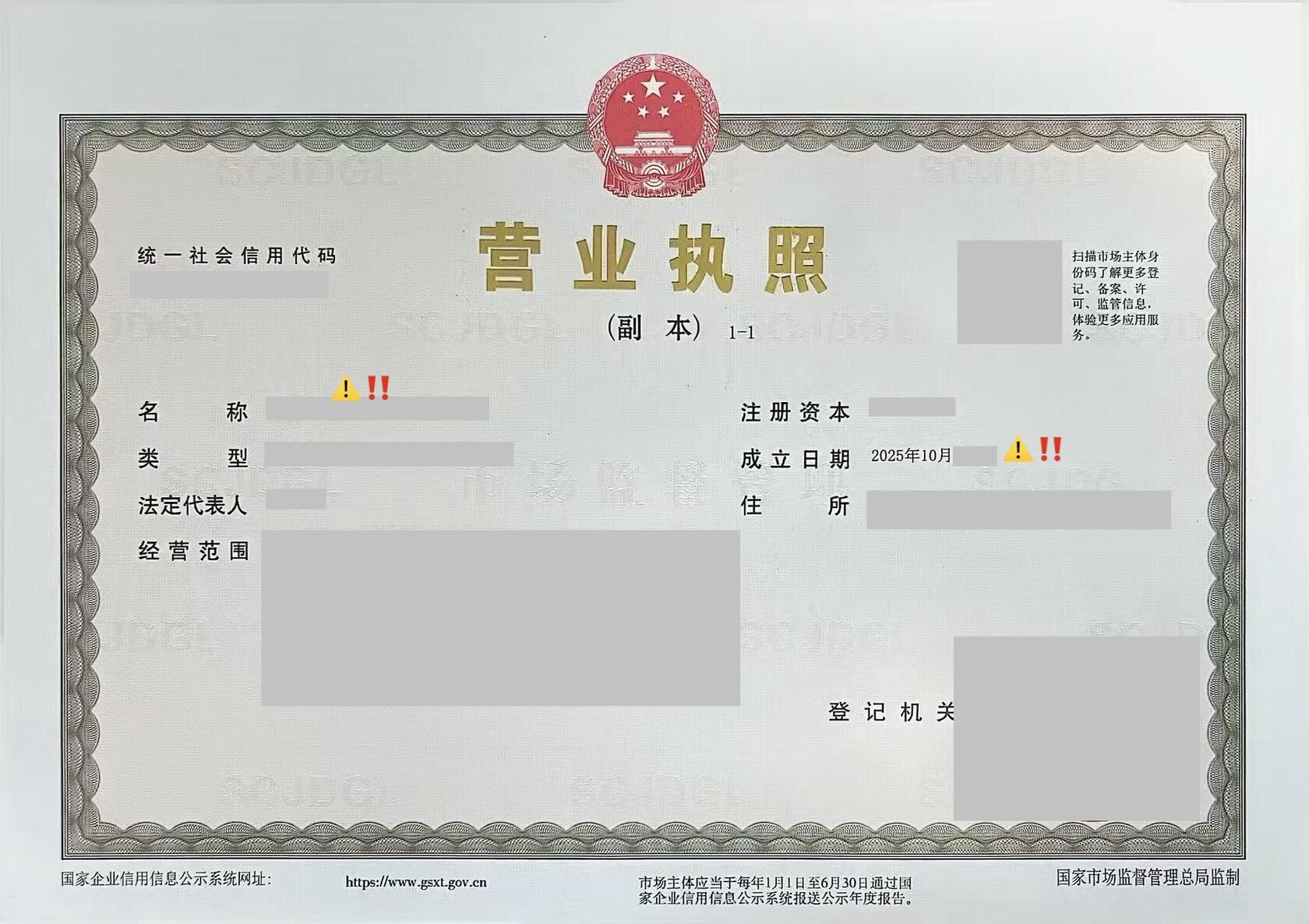
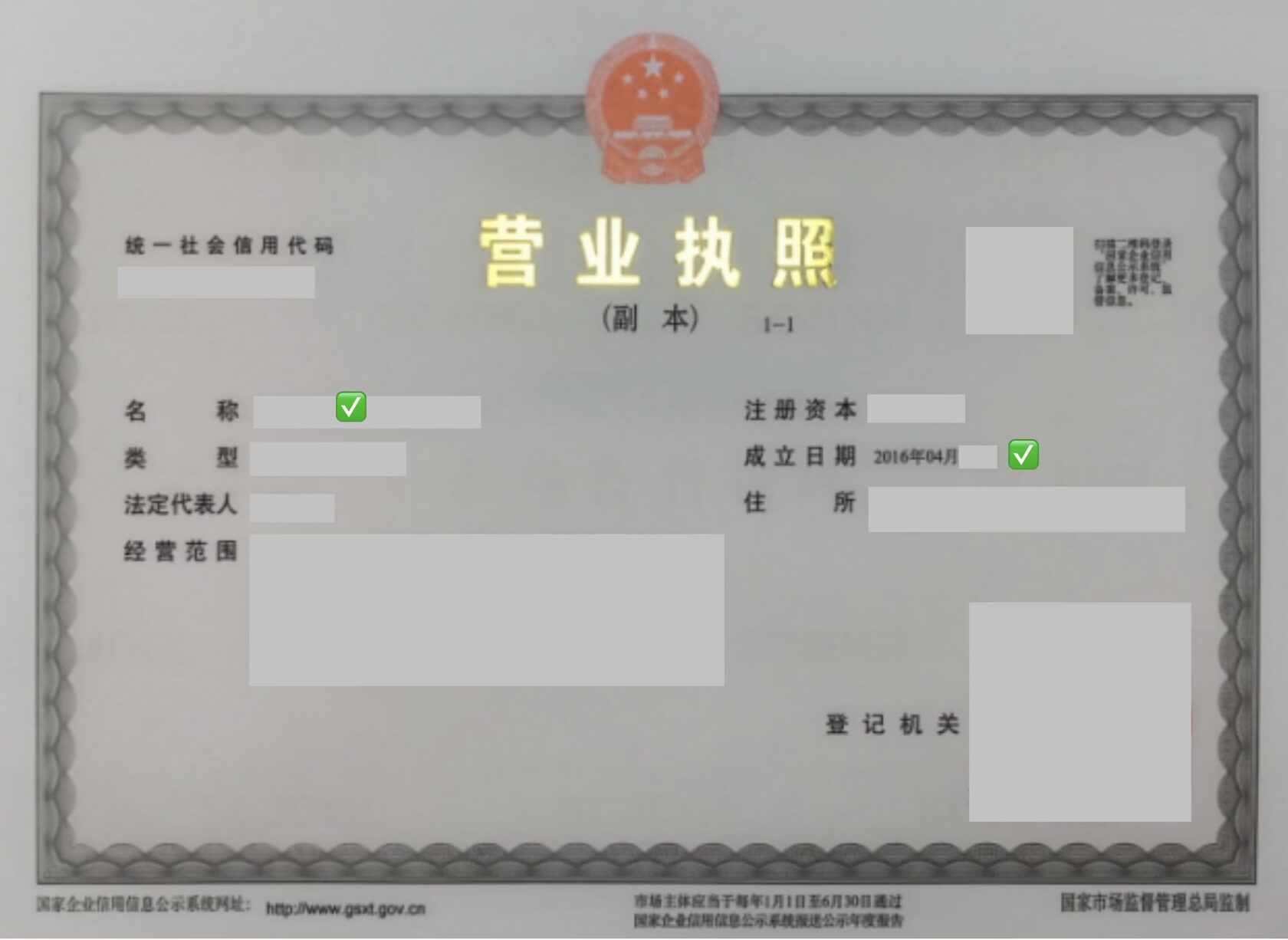
After the tour, the hurrying began: everything is agreed, time to pay the deposit. I explained that it is not so fast. First the client’s confirmation, then the contract — and a contract needs the seller’s documents. While we exchanged paperwork, I looked into the name on the banners. It belonged to a large trailer manufacturer, not to “their brand”. Then their business licence arrived and completed the picture. The company selling to me had been registered in October 2025 — my visit fell in its seventh month of existence. The manufacturer on the banners had been working since April 2016.
I contacted that manufacturer directly, and in the end we placed the order with them. When I asked who the first company was, they could not say. Trading companies circle around their production and outsource orders to their lines. For China, this is normal. It is also why supplier profiles so often say “our production capability” rather than “our factory”. Read the phrasing literally: capability is not ownership.
The conclusion is uncomfortable. A convincing factory visit proves that you saw a factory. It does not prove who makes your goods, on whose line, and who answers when something goes wrong. Those answers show up in documents and in production itself — during the order, not during the tour.
Anton Gora
Independent sourcing
and purchasing agent in China
and purchasing agent in China
Master’s degree in Sinology
In China since 2005
In China since 2005